Why 2026 Is Shaping Up to Be a Strong Year for Out of Home Advertising
Why Out of Home Is Back at the Centre of Attention
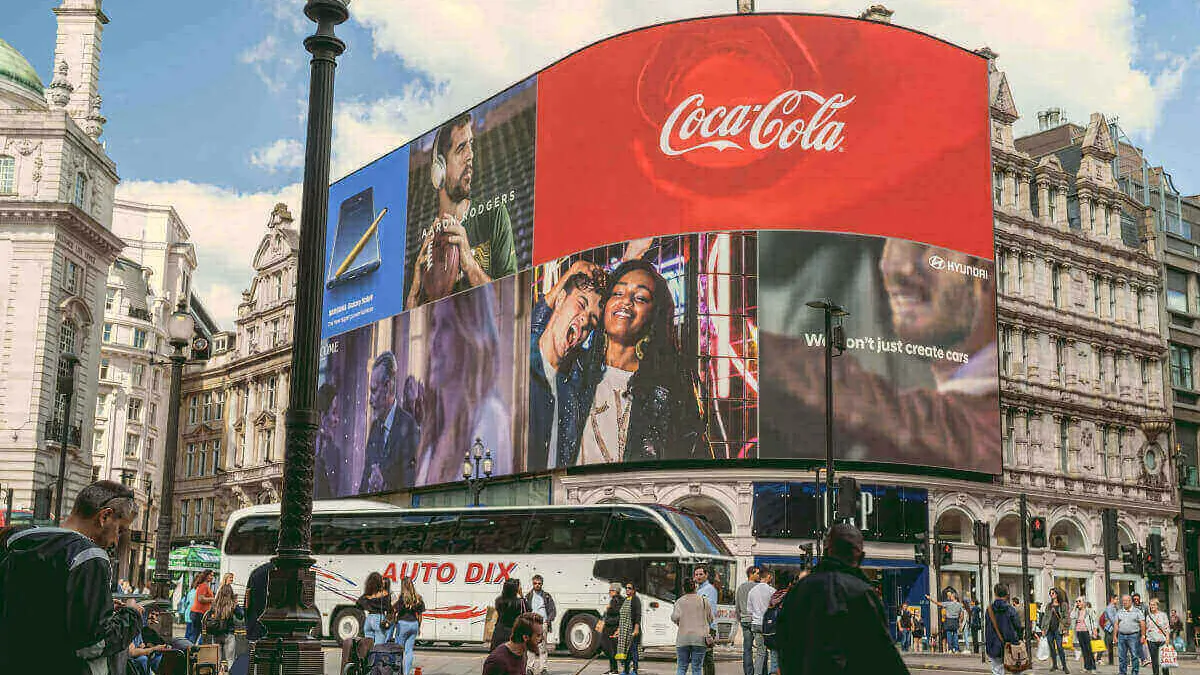
In a media landscape defined by audience fragmentation and growing screen fatigue, out of home advertising is quietly reclaiming attention in a way few channels can. High impact sites in global cities have become cultural reference points, with OOH executions regularly shared across social platforms and discussed far beyond their physical locations.
This renewed visibility is not accidental. It reflects a broader shift in how brands think about attention, context and real-world presence. As digital environments become more crowded and harder to navigate, OOH offers scale, simplicity and credibility in shared public spaces.
Smarter Buying Is Changing How OOH Is Planned
One of the clearest signals that it looks like a good year for OOH is how much easier the channel has become to buy and plan. Programmatic digital OOH continues to mature, with buying experiences now far closer to those of online and other digital channels. Advertisers can plan with greater confidence, mixing guaranteed placements with more flexible buying approaches from a single workflow.
This matters because OOH has traditionally been seen as powerful but operationally complex. That perception is changing. Campaigns that once required lengthy manual coordination can now be planned with far greater speed and precision, while still allowing brands to secure specific high-profile locations at key moments. The result is a channel that feels both premium and practical, able to sit comfortably alongside digital video, connected TV and other screen-based media.
The Rise of Dynamic and Contextual Creative
Creative flexibility is another reason OOH is entering a strong phase. Dynamic creative has moved beyond experimentation and is becoming a more deliberate part of planning conversations. Brands are increasingly using data signals such as location, time of day, weather and cultural moments to ensure creative feels timely and relevant rather than static.
While this approach requires more coordination than traditional OOH campaigns, the results seen over the past year have shifted perceptions. Rather than being a one-off execution, OOH can now support longer term campaigns where messaging evolves over time, rotating products, offers or narratives without losing consistency.
This shift is changing how the medium is valued. OOH is no longer only associated with launches or short bursts of awareness. It is increasingly viewed as a platform that can sustain storytelling and relevance across extended periods, a point often reinforced in trade commentary and campaign analysis.
AI’s Growing Role Without Losing the Human Touch
AI is beginning to influence how OOH campaigns are planned, executed and measured, though the channel is still at an early stage compared to other media. The growing availability of campaign data has created opportunities for smarter decision making, from identifying the strongest locations to understanding which creative approaches are most effective.
What makes this moment interesting is the balance being struck. Rather than replacing human judgement, AI is being used to support it, helping planners move faster and test ideas with more confidence. Industry discussions suggest that the most successful use of AI in OOH will be incremental rather than disruptive, improving efficiency while preserving the creative and strategic thinking that makes the channel distinctive.
As these tools develop, OOH becomes easier to integrate with other media, strengthening its role in joined up planning rather than operating in isolation.
Why This Moment Matters for Brands
Taken together, these shifts explain why it looks like a good year for OOH. The channel sits at the intersection of visibility, trust and innovation. It benefits from public attention at a time when private screens feel increasingly saturated, while also offering the technological sophistication brands expect from modern media.
For brands that have not yet fully embraced OOH as part of their omnichannel planning, the conditions have rarely been more favourable. With smarter buying, more flexible creative and evolving technology, the channel is set up not just for a strong year, but for a more central role in media strategies going forward.