Heinz Trade-Up: How a Simple Vending Machine Turned Everyday Frustration into Experiential Gold
by Sophie Bennett — 27 Jan 2026
5 minute read
When everyday annoyances become brand opportunities
Most great experiential ideas do not start with something flashy. They start with a small truth. For Heinz, that truth was hiding in kitchen drawers. Unwanted ketchup sachets piling up, rarely used, often ignored, yet impossible to throw away.
Instead of treating this as a minor inconvenience, Heinz flipped it into an idea that worked perfectly in the physical world. The Heinz Trade-Up campaign invited people to bring those forgotten sachets and exchange them for something they genuinely wanted. A proper bottle of Heinz ketchup.
This is where being out of home comes into its own. The idea only works when people step outside, interact, and take part in something tangible.
A vending machine that people actually wanted to use
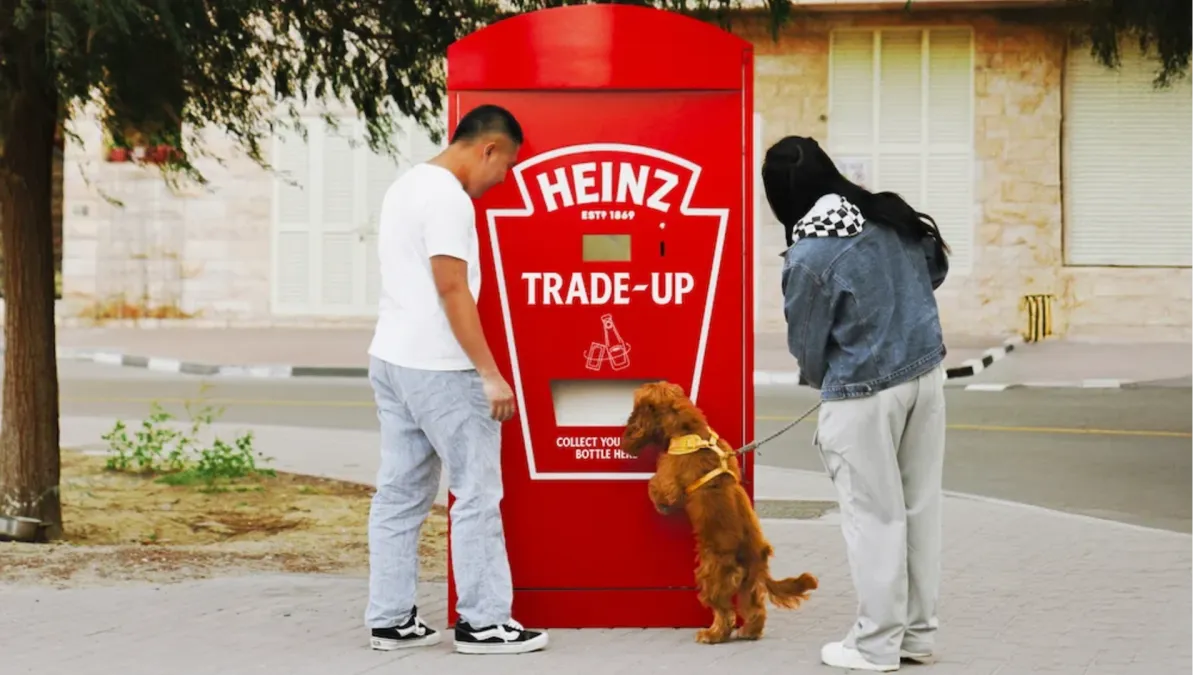
In Dubai, Heinz placed custom vending machines across busy residential and lifestyle locations including Jumeirah Village Circle, Jumeirah Beach Residence, Discovery Gardens and Bur Dubai. The mechanic was simple. Deposit five unwanted ketchup sachets and receive a full bottle of Heinz.
No apps. No complicated steps. Just a physical interaction that felt fair, playful and rewarding.
Research behind the campaign showed how relatable the problem was. A large majority of residents admitted to having unused sachets at home, with many saying they would be more inclined to use them if they were Heinz. The vending machine turned that insight into action, creating queues, conversations and social sharing without forcing it.
From an out of home perspective, this is a strong example of how experiential placements can blend utility with entertainment. The media itself becomes the message.
Why this worked so well in outdoor environments
Experiential OOH succeeds when it respects how people move through cities. Heinz chose locations where residents already spend time, not places that feel staged or overly promotional.
The machines did not shout for attention. They invited curiosity. People noticed others interacting, asked questions, filmed the exchange, and shared it naturally. That is the power of physical presence combined with a clear, human idea.
This is the same principle that applies across other outdoor formats such as transport hubs, retail environments, roadside locations and even airports. When the experience fits the space, engagement follows without friction.
Campaigns like this sit comfortably alongside broader out of home strategies showcased across projects on the Media Agency Group work section, where creative ideas are matched to the right environments rather than forced into them.
A global idea with local flexibility
What makes the Heinz Trade-Up particularly interesting is how easily the idea travels. The core mechanic remains the same, but the execution adapts to local habits.
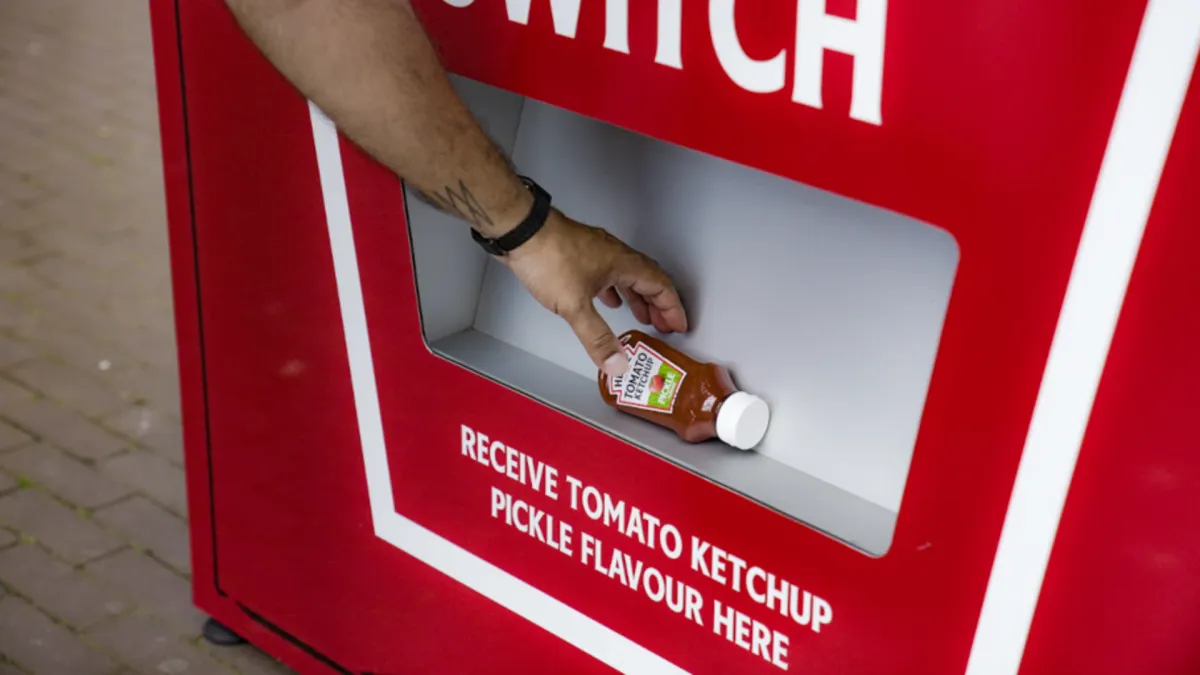
A similar thinking appeared in Europe with Heinz’s Pickle Switch activation, where people were encouraged to trade unwanted pickles for bottles of pickle-flavoured ketchup. Different product, same insight. People often remove something they do not want, even when it belongs there.
By responding to behaviour rather than geography, Heinz created a format that could work just as naturally in the UK, the UAE, or any other market where out of home plays a role in daily life.
This global adaptability is exactly why experiential OOH continues to grow across cities with diverse audiences, from London to Dubai and beyond.
The role of experiential OOH in modern media plans
Experiential campaigns like Heinz Trade-Up show that out of home is no longer just about visibility. It is about participation.
When planned alongside other formats such as billboards, transit media, airports, supermarkets, cinema and sports environments, experiential placements add depth to a brand’s presence. They give people a reason to stop, engage and remember.
This approach aligns with how Media Agency Group approaches outdoor planning across its services, combining classic OOH with newer experiential formats to create campaigns that feel relevant rather than repetitive.
Why brands keep coming back to the physical world
Digital channels move fast. Outdoor experiences linger. People remember the moment they interacted with a brand in real life, especially when it solved a problem or made them smile.
Heinz did not rely on heavy calls to action or aggressive messaging. The brand trusted the idea, the placement and the product. The result was organic attention, earned media and a strong emotional connection.
That balance between creativity and simplicity is what keeps out of home effective, even as media landscapes evolve.
FAQs
Q. What is experiential out of home advertising?
Experiential OOH involves interactive or participatory formats that invite people to engage with a brand in physical spaces, rather than just view a message.
Q. Why did the Heinz Trade-Up campaign succeed?
It was built on a relatable insight, used a simple mechanic, and placed the experience in locations where people naturally spend time.
Q. Can experiential OOH work in both the UK and UAE?
Yes. When ideas are based on human behaviour rather than culture-specific gimmicks, they can adapt easily across global markets.
Q. Is experiential OOH suitable for large brands only?
Not necessarily. The scale can vary. What matters most is the clarity of the idea and choosing the right environment for activation.
Q. How does experiential OOH fit into a wider media strategy?
It works best alongside other outdoor formats, adding depth and memorability while supporting broader awareness and brand storytelling.
If you enjoy exploring how brands bring ideas to life in the physical world, you can find more examples across the Media Agency Group news and gallery sections, where creativity and out of home meet without forcing the sale.