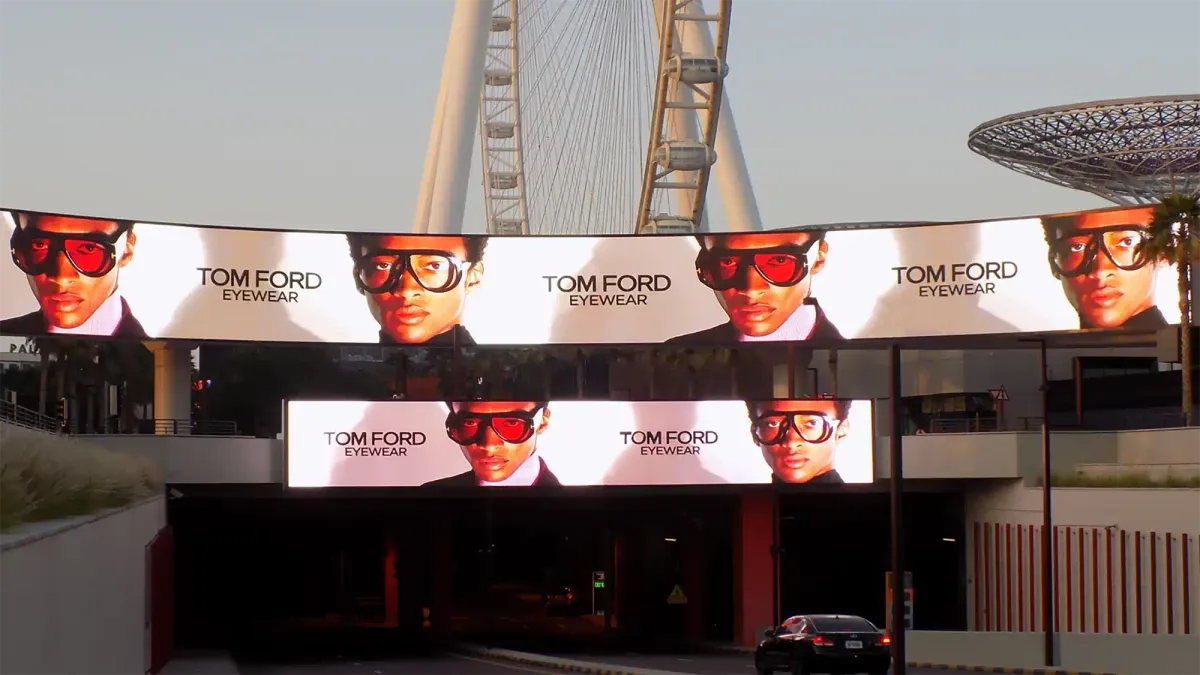
What is DOOH advertising?
by Khuzaima Yamman — 13 May 2026
3 minute read
DOOH advertising stands for Digital Out-of-Home advertising. It is a modern form of outdoor advertising that uses digital screens instead of traditional static billboards to display promotional messages, videos, and real-time content in public spaces.
You see DOOH every day on digital billboards, airport screens, mall displays, and even screens inside elevators or taxis, without realizing it.
This guide explains DOOH in a simple and structured way.
1. Understanding DOOH in Simple Terms
Traditionally, outdoor advertising used printed posters and billboards that stayed the same for weeks or months. DOOH replaces those static ads with digital screens that can change content instantly.
So instead of a printed poster, imagine:
- A large LED billboard on a highway
- A screen in a shopping mall showing rotating ads
- A digital panel at a bus stop updating every few seconds
That is DOOH advertising.
2. Where DOOH Advertising is Used
DOOH is everywhere in modern cities. Common locations include:
Transport hubs
- Airports
- Metro and train stations
- Bus stops and terminals
Public spaces
- Highways and roads
- City centers
- Stadiums and event venues
Commercial spaces
- Shopping malls
- Retail stores
- Restaurants and cafes
Other locations
- Office buildings
- Elevators
- Gyms and hospitals
These locations are chosen because they have high footfall and long viewing time.
3. How DOOH Advertising Works
DOOH uses digital screens connected to a content management system.
Here’s how it works step-by-step:
- Advertisers create digital ads (images or videos)
- Ads are uploaded to a DOOH network platform
- The system schedules when and where ads appear
- Screens display ads in rotation or in real time
- Campaign performance can be monitored digitally
Some advanced DOOH systems even use data and AI to decide when ads should run for maximum impact.
4. Types of DOOH Advertising
DOOH is not just one format. It includes several types:
1. Digital Billboards
Large LED screens placed on highways or buildings. They show rotating ads.
2. Transit DOOH
Screens in buses, taxis, trains, and metro stations.
3. Retail DOOH
Screens inside malls and stores promoting products.
4. Place-Based DOOH
Screens in gyms, offices, elevators, or restaurants.
5. Interactive DOOH
Touch screens or motion-based displays where users can engage with content.
5. Key Features of DOOH Advertising
DOOH is powerful because it offers features that traditional billboards cannot:
Dynamic Content
Ads can change instantly without reprinting anything.
Real-Time Updates
Messages can be updated based on:
- Time of day
- Weather conditions
- Traffic situations
- Live events
High Visibility
Large digital screens attract more attention than static posters.
Flexibility
Advertisers can run multiple ads in rotation on the same screen.
6. Programmatic DOOH (Smart Buying System)
One of the biggest innovations in DOOH is programmatic advertising.
This means ad space is bought automatically using software instead of manual booking.
Benefits include:
- Faster ad placement
- Better audience targeting
- Real-time campaign adjustments
- Data-driven decision-making
For example:
A coffee brand may choose to display ads only:
- In the morning
- Near office districts
- During weekdays
This makes DOOH more efficient and targeted.
7. Benefits of DOOH Advertising
DOOH is popular because it offers strong advantages:
1. High Attention
People naturally notice bright digital screens in public spaces.
2. Better Engagement
Video and motion ads are more engaging than static posters.
3. Flexible Messaging
Brands can change content quickly without printing costs.
4. Large Audience Reach
DOOH reaches thousands of people daily in busy urban areas.
5. Brand Visibility
It creates strong brand awareness in high-traffic locations.
8. Real-World Example
Imagine a digital billboard on a busy road:
- Morning: shows coffee and breakfast ads
- Afternoon: shows retail and shopping deals
- Evening: shows food delivery and entertainment ads
- Rainy weather: shows taxi or ride-hailing ads
This flexibility makes DOOH highly relevant to real-world conditions.
9. Future of DOOH Advertising
DOOH is growing rapidly and will become even more advanced in the future.
Key trends include:
- AI-powered ad targeting
- Integration with mobile apps
- Real-time personalized messaging
- Smart city connectivity
- Augmented reality (AR) ads
- More interactive experiences
In smart cities, DOOH will become part of a larger digital communication network.