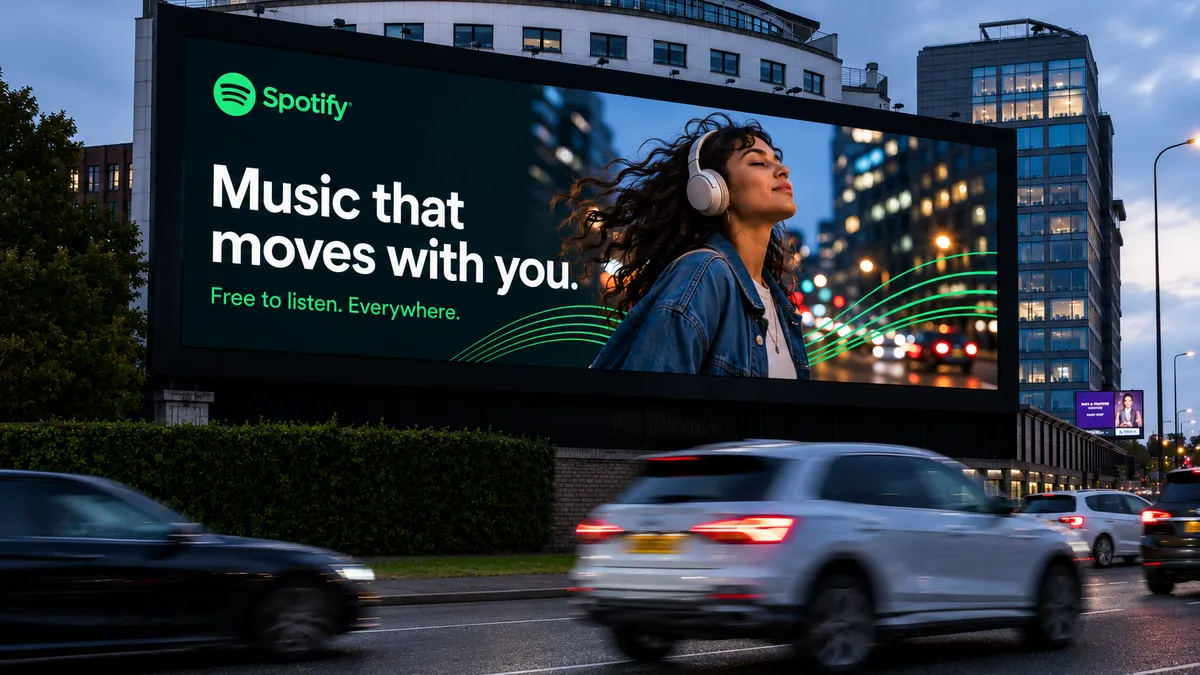
Why Billboards Remain a Powerful Advertising Channel in 2026
by Aneesa Umber — 13 Aug 2026
5 minute read
Billboard advertising remains a valuable channel for brands looking to build visibility and reach audiences at scale. Positioned along major roads, in city centres, near retail destinations and across busy locations, billboards place campaign messages in front of people throughout their everyday journeys.
The format has also developed beyond traditional printed displays. Digital billboards, programmatic buying and audience-led planning give advertisers greater flexibility over where, when and how campaigns appear.
In 2026, the combination of prominent placement, large-format creative and flexible digital capabilities continues to make billboard advertising an important part of modern advertising campaigns.
Billboards Build Visibility at Scale
Billboards give brands a large advertising space in prominent locations, helping campaign messages remain visible throughout busy areas and travel routes.
Their size makes them particularly suited to clear headlines, product imagery and recognisable branding. A well-planned billboard can communicate its main message quickly, which is important when audiences may only have a limited viewing window.
Creative quality matters too. Strong branding, clear messaging and an effective visual hierarchy can help audiences understand the campaign quickly. For billboard creative, elements such as typography and readability should therefore be considered alongside the placement itself.
Location Connects Brands With Relevant Audiences
The effectiveness of billboard advertising depends heavily on where the campaign appears.
Brands can select billboard locations based on the audiences they want to reach and the environments relevant to their campaign. This could include major roads, city centres, commercial districts, retail destinations, airports or other high traffic locations.
For example, a retail campaign could focus on areas close to shopping destinations, while a business focused campaign may prioritise commercial districts. This makes location an important part of billboard media planning rather than simply choosing sites based on visibility alone.
Repeated Exposure Supports Brand Recognition
Billboards can create repeated exposure when people regularly travel past the same locations.
Daily commuting, shopping and travel patterns can give audiences multiple opportunities to encounter the same campaign throughout its booking period. Frequency is a recognised consideration in OOH planning because repeated exposure can support familiarity and brand recall.
Consistent creative across several billboard locations can extend this effect by giving audiences opportunities to recognise the campaign in different places.
Simple Creative Can Communicate Quickly
Billboard advertising works best when the creative is designed for the way the format is viewed.
A focused headline, clear visual and visible brand identity can communicate the central idea without asking audiences to process too much information. This is particularly important for roadside placements where viewing time may be limited.
Billboard creative should therefore prioritise the message that matters most. Supporting details can be communicated through the brand's website, search, social media or other campaign channels.
Digital Billboards Add Creative Flexibility
Digital billboard advertising gives brands more flexibility over how campaign creative is displayed.
Multiple executions can run across digital screens, allowing advertisers to feature different products or update messaging during a campaign. Depending on the available technology and inventory, creative can also be scheduled around particular times or relevant contextual conditions.
These capabilities are part of the wider development of digital out of home advertising, where data, dynamic creative and digital technology are creating more flexible campaign opportunities.
Programmatic Technology Expands Digital OOH
Programmatic technology gives advertisers greater control over how digital billboard campaigns are planned and delivered.
Programmatic platforms can automate campaign buying and use factors such as audience, location, timing and available inventory to inform delivery. This allows advertisers to manage digital billboard activity around the specific requirements of their campaign.
For programmatic DOOH, this flexibility can help brands deliver relevant creative across selected digital outdoor locations and at suitable times.
Billboards Can Support Online Activity
Billboard advertising can work alongside search, social media, mobile advertising and other digital channels.
Someone may see a billboard during their journey and later search for the brand, visit its website or encounter related campaign creative online. Consistent messaging across these channels can make the brand easier to recognise when that next interaction occurs.
This gives billboards a useful role within integrated campaigns, where outdoor media builds awareness and other channels provide additional ways to engage with the brand.
Static and Digital Billboards Serve Different Campaign Needs
Both static and digital billboards can play valuable roles within an advertising campaign.
Static billboards provide one campaign creative with a consistent presence at a selected location throughout the booked period. They can work well when the objective is sustained visibility around a clear brand or product message.
Digital billboards allow creative to rotate and can provide greater flexibility around scheduling and campaign delivery.
The right choice depends on the campaign objectives, locations, audience and creative requirements. Brands can also use billboard advertising across static and digital formats as part of the same campaign.
Billboard Campaigns Can Be Measured
Billboard campaigns can be evaluated using audience data and campaign specific performance indicators.
Depending on the market, location and media owner, advertisers may have access to estimated impressions, reach, frequency, traffic, footfall and other audience measurements. Campaign performance can also be considered alongside website activity, branded searches, enquiries, store visits or sales where appropriate.
The most useful measurements depend on the campaign objective. A brand awareness campaign may focus on reach and frequency, while a campaign designed to encourage action may also consider website activity, enquiries or other relevant outcomes.
Making Billboard Advertising Part of Your 2026 Strategy
Billboard advertising continues to give brands a prominent way to build visibility, reach audiences in relevant locations and support wider marketing activity. With static, digital and programmatic options available, campaigns can be planned around different audiences, locations and objectives.
The right combination of placement, format and creative can help make billboard advertising a valuable part of your 2026 media strategy.
Planning your next billboard campaign? Get in touch with us to discuss suitable billboard locations, formats and campaign opportunities for your brand.